Sunday, 1 December 2019

In “60 Minutes” appearance, YouTube’s CEO offers a master class in moral equivalency

Susan Wojcicki may be one of the most powerful women in Silicon Valley, but she also holds the unenviable role of being ultimately responsible for a lot of garbage that we, along with our parents, siblings, friends, neighbors, colleagues, children — not to mention billions of strangers — now consume on YouTube.

That garbage, along with valuable content, is inevitable on a platform that Wojcicki says sees 500 hours of video downloaded to the platform every single minute. But it doesn’t meant that YouTube can’t do more, particularly given the vast financial resources of its parent company, Alphabet, which had a stunning $117 billion in financial reserves as of this summer — more than any company on the planet.

Instead, as Wojcicki explains to reporter Leslie Stahl on tonight’s episode of “60 Minutes,” the company has broadly drawn a line at taking down videos that cause “harm,” versus videos that spread hatred and disinformation.

The distinction is laughable, alas. “So if you’re saying, “Don’t hire somebody because of their race, that’s discrimination,” according to Wojcicki, “and so that would be an example of something that would be a violation against our policies.” Meanwhile, as Stahl notes, a video stating that “white people are superior” but that doesn’t explicitly incite action on the part of viewers would be fine with Youtube. If that video says “nothing else, yes,” confirms Wojcicki.

It’s a horrifying position for the company to take and for Wojcicki to be responsible, and ultimately, Wojcicki’s best defense, in her own words, is that the site is better because she knows she can make it better. It’s exceedingly cold comfort.

If you missed the episode, you can read the transcript below.

[STAHL STUDIO:]  


TO GRASP THE PHENOMENAL SCALE OF YOUTUBE: CONSIDER THAT PEOPLE SPEND 1 BILLION HOURS WATCHING VIDEOS ON IT — EVERY DAY. IT IS THE MOST USED SOCIAL NETWORK IN THE U-S.  MORE QUERIES ARE TYPED INTO THE WEBSITE’S SEARCH-BAR THAN ANYWHERE ONLINE EXCEPT GOOGLE… WHICH OWNS YOUTUBE.


BUT THE SITE HAS COME UNDER INCREASING SCRUTINY, ACCUSED OF PROPAGATING WHITE SUPREMACY, PEDDLING CONSPIRACIES AND PROFITING FROM IT ALL. THEY RECENTLY AGREED TO PAY A RECORD $170 MILLION DOLLARS TO SETTLE ALLEGATIONS THAT THEY TARGETED CHILDREN WITH ADS. YOUTUBE IS BEING FORCED TO CONCENTRATE ON CLEANSING THE SITE.


WE VISITED THE COMPANY’S HEADQUARTERS IN SAN BRUNO, CALIFORNIA, TO MEET SUSAN WOJISKEY, THE 51-YR-OLD CEO, IN CHARGE OF NURTURING THE SITE’S CREATIVITY, TAMING THE HATE AND HANDLING THE CHAOS.


VIDEO:


SUSAN: We have 500 hours of video uploaded every single minute to YouTube.

STAHL: Fi– say that again.

SUSAN: So we have 500 hours of video uploaded every minute to YouTube.

STAHL: That is breathtaking.

SUSAN: It, it is, it is. We have a lot of video.


AND A LOT OF INFLUENCE ON OUR LIVES, AND HOW WE PASS OUR TIME.    


SOT: MUSIC


OVER A BILLION PEOPLE LISTEN TO MUSIC ON YOUTUBE EVERY MONTH: IT’S THE PLANET’S TOP MUSIC SITE. THERE’S A CHILDREN’S CHANNEL; WITH OVER 44-BILLION VIEWS.   


STAHL: Do you let your children watch YouTube, including the young ones?

SUSAN: So I allow my younger kids to use YouTube Kids, but I limit the amount of time that they’re on it.  I think too much of anything is not a good thing. But there’s a lot you can learn on YouTube. I think about how YouTube in many ways is this global library. You wanna see any historical speech – you could see it. You want to be able to learn a language –

STAHL: Make a soufflé?

SUSAN: – wanna laugh, you just wanna see something funny. A soufflĂ©! Oh, yeah, cooking. Cooking’s a great example.


SO’S WATCHING PEOPLE BINGE EAT. (NAT) A GROWING NUMBER OF AMERICAN ADULTS ARE TURNING TO IT FOR THEIR NEWS… SPORTS… MEDICAL INFORMATION. IT’S NOW MANKIND’S LARGEST “HOW TO” COLLECTION: (NAT)HOW TO TIE A TIE… TIE THE KNOT…OR SPEAK THAI.


THE SITE HAS PRODUCED WHOLE NEW PASTTIMES WHERE MILLIONS WATCH STRANGERS OPEN BOXES… (NAT) WHISPER… SLEEP…  YOUTUBE’S ARTIFICIAL INTELLIGENCE ALGORITHMS KEEP RECOMMENDING NEW VIDEOS SO USERS WATCH MORE AND MORE AND MORE.


STAGE: HAPPY FRIDAY!


WOJCICKI INVITED US TO THE WEEKLY ALL-STAFF MEETING. SHE’S SURPRISINGLY DOWN-TO-EARTH FOR ONE OF THE MOST POWERFUL PEOPLE IN SILICON VALLEY, (NAT) WHERE HER TRAJECTORY STARTED IN AN UNLIKELY WAY.


SUSAN: I owned a garage. And I was worried about covering the mortgage. So I was willing to rent my garage to any student. But then two students appeared. One was named Sergey Brin. The other was named Larry Page. They are the founders of Google.

STAHL: Yes, they are.

SUSAN: But at the time they were just students. They looked like any other students.


LARRY AND SERGEY ENDED UP HIRING HER AS THEIR FIRST MARKETING MANAGER: SHE WAS GOOGLE EMPLOYEE 16.  AS THE COMPANY GREW, SO DID HER ROLE AND SO DID HER FAMILY.. SHE HAS 5 CHILDREN. GOOGLE BOUGHT YOUTUBE ON HER RECOMMENDATION, FOR OVER $1.6 BILLION, AND 8 YEARS LATER SHE BECAME CEO – WITH A MANDATE TO MAKE IT GROW AND MAKE IT PROFITABLE. AND SHE DID! IT’S ESTIMATED WORTH IS $160-BILLION.


(SOT POP)


YOUTUBE MAKES MOST OF ITS MONEY FROM ADS – (NAT) SPLITTING REVENUE WITH PEOPLE WHO CREATE ALL KINDS OF VIDEOS(NAT) FROM DO-IT-YOURSELF LESSONS… TO HIP-HOP LESSONS. THE MORE POPULAR ONES CAN BECOME MULTI-MILLION DOLLAR ENTREPRENEURS.


[Ad: Joe Biden promised Ukraine a billion dollars if they fired the prosecutor investigating his son’s company…]


YOUTUBE ALSO MAKES MONEY FROM POLITICAL ADS, A THORNY ISSUE BECAUSE SOME OF THEM HAVE BEEN USED TO SPREAD LIES ON SOCIAL MEDIA. 


STAHL: Facebook is facing a lot of controversy because it refuses to take down a President Trump ad about Biden which is not true. Would you run that ad?

SUSAN: So that is an ad that, um, right now would not be a violation of our policies.

STAHL: Is it on YouTube right now?

SUSAN: It has been on YouTube.

STAHL: Can a politician lie on YouTube?

SUSAN: For every single video I think it’s really important to look at it. Politicians are always accusing their opponents of lying. That said, it’s not okay to have technically manipulated content that would be misleading. For example, there was a video uploaded of Nancy Pelosi. It was slowed down just enough that it was unclear whether or not she was in her full capacity ’cause she was speaking in a slower voice.


PELOSI AD: Why would I work with you if you’re investigating me…


SUSAN: The title of the video actually said drunk, had that in the title. And we removed that video.

STAHL: How fast did you remove it?

SUSAN: Very fast.


BUT NOT COMPLETELY. WE JUST DID A SEARCH AND THERE IT WAS STILL AVAILABLE. THE COMPANY KEEPS TRYING TO ERASE THE PURPORTED NAME OF THE IMPEACHMENT WHISTLE-BLOWER, BUT THAT TOO IS STILL THERE. WHICH RAISES DOUBTS ABOUT THEIR SYSTEM’S ABILITY TO CLEANSE THE SITE. 


IN THE 2016 ELECTION CYCLE, YOUTUBE FAILED TO DETECT RUSSIAN TROLLS, WHO POSTED OVER 1,100 VIDEOS, ALMOST ALL MEANT TO INFLUENCE AFRICAN-AMERICANS – LIKE THIS VIDEO. 


SOT: Please don’t vote for Hillary Clinton.  She’s not our candidate… She’s a f**king old racist bitch.


YOUTUBE IS AN “OPEN PLATFORM” MEANING ANYONE CAN UPLOAD A VIDEO, AND SO THE SITE HAS BEEN USED TO SPREAD DISINFORMATION, VILE CONSPIRACIES, AND HATE. THIS PAST MARCH A WHITE SUPREMACIST LIVE-STREAMED HIS KILLING OF DOZENS OF MUSLIMS IN CHRISTCHURCH, NEW ZEALAND. HE USED FACEBOOK, BUT FOR THE NEXT 24 HOURS COPIES OF THAT FOOTAGE WERE UPLOADED ON YOUTUBE TENS OF THOUSANDS OF TIMES. 


SUSAN: This event was unique because it was really a made-for-Internet type of crisis. Every second there was a new upload. And so our teams around the world were working on this to remove this content. We had just never seen such a huge volume.

STAHL: I can only imagine when you became CEO of YouTube that you thought, “Oh, this is gonna be so fun. It’s “people are uploading wonderful things like

SUSAN: funny cat videos.

STAHL: –funny. And look at what we’re talking about here. Are you worried that these dark things are beginning to define YouTube?

SUSAN: I think it’s incredibly important that we have a responsibility framework, and that has been my number one priority. We’re removing content that violates our policies. We removed, just in the last quarter, 9 million videos.

STAHL: You recently tightened your policy on hate speech.

SUSAN: Uh-huh.

STAHL: Why.. why’d you wait so long?

SUSAN: Well, we have had hate policies since the very beginning of YouTube.  And we–

STAHL: But pretty ineffective.

SUSAN: What we really had to do was tighten our enforcement of that to make sure we were catching everything and we use a combination of people and machines. So Google as a whole has about 10,000 people that are focused on controversial content.

STAHL: I’m told that it is very stressful to be looking at these questionable videos all the time. And that there’s actually counselors to make sure that there aren’t mental problems with the people who are doing this work.  Is that true?

SUSAN: It’s a very important area for us. We try to do everything we can to make sure that this is a good work environment. Our reviewers work 5 hours of the 8 hours reviewing videos.  They have the opportunity to take a break whenever they want.

STAHL: I also heard that these monitors, reviewers, sometimes, they’re beginning to buy the conspiracy theories.

SUSAN: I’ve definitely heard about that. And we work really hard with all of our reviewers to make sure that, you know, we’re providing the right services for them.


SUSAN WOJCICKI SHOWED US TWO EXAMPLES OF HOW HARD IT IS TO DETERMINE WHAT’S TOO HATEFUL OR VIOLENT TO STAY ON THE SITE.


SUSAN@DEMO: [SEE KICK] So this is a really hard video to watch.

STAHL: Really hard.

SUSAN: And as you can see, these are prisoners in Syria. So you could look at it and say, “Well, should this– it be removed, because it shows violence, it’s graphic,” but it’s actually uploaded by a group that is trying to expose the violence.


SO SHE LEFT IT UP. THEN SHE SHOWED US THIS WORLD WAR TWO VIDEO.


STAHL:  I mean it’s totally historical footage that you would see on the History Channel.


BUT SHE TOOK IT DOWN!


STAHL:  Why?

SUSAN: There is this word down here that you’ll see, 1418.


1418 IS CODE USED BY WHITE SUPREMACISTS TO IDENTIFY ONE ANOTHER  


SUSAN: For every area we work with experts, and we know all the hand signals, the messaging, the flags, the songs, and so there’s quite a lot of context that goes into every single video to be able to under- stand what are they really trying to say with this video.


THE STRUGGLE FOR WOJCICKI IS POLICING THE SITE… WHILE KEEPING YOUTUBE AN OPEN PLATFORM. 


SUSAN@HALLWAY You can go too far and that can become censorship. And so we have been working really hard to figure out what’s the right way to balance responsibility with freedom of speech.


BUT THE PRIVATE SECTOR IS NOT LEGALLY BEHOLDEN TO THE FIRST AMENDMENT. 


STAHL: You’re not operating under some– freedom of speech mandate. You get to pick.

SUSAN: We do. But we think there’s a lot of benefit from being able to hear from groups and underrepresented groups that otherwise we never would have heard from.


[Lauren Southern: But with name calling of Nazi or propagandist…]


BUT THAT MEANS HEARING FROM PEOPLE WITH ODIOUS MESSAGES ABOUT GAYS, 

[Crowder: Mr. Lipsy Queer from Vox.] WOMEN [Naked Ape: Sex robot] AND IMMIGRANTS:


Nick Fuentes: I think the easiest way for Mexicans to not get shot and killed at Walmart —


WOJCICKI EXPLAINED THAT VIDEOS ARE ALLOWED AS LONG AS THEY DON’T CAUSE HARM: BUT HER DEFINITION OF “HARM” CAN SEEM NARROW.


SUSAN: So if you’re saying, “Don’t hire somebody because of their race, that’s discrimination.  And so that would be an example of something that would be a violation against our policies.

STAHL: But if you just said, “White people are superior” by itself, that’s okay.

SUSAN: And nothing else, yes.


BUT THAT IS HARMFUL IN THAT IT GIVES WHITE EXTREMISTS A PLATFORM TO INDOCTRINATE. 


SPENCER:  We want a flourishing, healthy white race.


AND WHAT ABOUT MEDICAL QUACKERY ON THE SITE? LIKE TUMERIC CAN REVERSE CANCER; BLEACH CURES AUTISM; VACCINES CAUSE AUTISM. 


ONCE YOU WATCH ONE OF THESE, YOUTUBE’S ALGORITHMS MIGHT RECOMMEND YOU WATCH SIMILAR CONTENT. BUT NO MATTER HOW HARMFUL OR UNTRUTHFUL, YOUTUBE CAN’T BE HELD LIABLE FOR ANY CONTENT, DUE TO A LEGAL PROTECTION CALLED “SECTION 230.”


STAHL: The law under 230 does not hold you responsible for user-generated content. But in that you recommend things, sometimes 1,000 times, sometimes 5,000 times, shouldn’t you be held responsible for that material, because you recommend it?

SUSAN: Well, our systems wouldn’t work without recommending. And so if–

STAHL: I’m not saying don’t recommend. I’m just saying be responsible for when you recommend so many times.

SUSAN: If we were held liable for every single piece of content that we recommended, we would have to review it. That would mean there’d be a much smaller set of information that people would be finding. Much, much smaller.


SHE TOLD US THAT EARLIER THIS YEAR YOUTUBE STARTED RE-PROGRAMMING ITS ALGORITHMS IN THE US TO RECOMMEND QUESTIONABLE VIDEOS MUCH LESS…  AND POINT USERS WHO SEARCH FOR THAT KIND OF MATERIAL TO AUTHORATATIVE SOURCES, LIKE NEWS CLIPS. WITH THESE CHANGES WOJCICKI SAYS THEY HAVE CUT DOWN THE AMOUNT OF TIME AMERICANS WATCH CONTROVERSIAL CONTENT BY 70 PERCENT.  


STAHL: Would you be able to say to the public: we are confident we can police our site?


SUSAN: YouTube is always going to be different than something like traditional media where every single piece of content is produced and reviewed.  We have an open platform. But I know that I can make it better.  And that’s why I’m here.


from TechCrunch https://ift.tt/2sBytgn

Now even the FBI is warning about your smart TV’s security

If you just bought a smart TV on Black Friday or plan to buy one for Cyber Monday tomorrow, the FBI wants you to know a few things.

Smart TVs are like regular television sets but with an internet connection. With the advent and growth of Netflix, Hulu and other streaming services, most saw internet-connected televisions as a cord-cutter’s dream. But like anything that connects to the internet, it opens up smart TVs to security vulnerabilities and hackers. Not only that, many smart TVs come with a camera and a microphone. But as is the case with most other internet-connected devices, manufacturers often don’t put security as a priority.

That’s the key takeaway from the FBI’s Portland field office, which just ahead of some of the biggest shopping days of the year posted a warning on its website about the risks that smart TVs pose.

“Beyond the risk that your TV manufacturer and app developers may be listening and watching you, that television can also be a gateway for hackers to come into your home. A bad cyber actor may not be able to access your locked-down computer directly, but it is possible that your unsecured TV can give him or her an easy way in the backdoor through your router,” wrote the FBI.

The FBI warned that hackers can take control of your unsecured smart TV and in worst cases, take control of the camera and microphone to watch and listen in.

Active attacks and exploits against smart TVs are rare, but not unheard of. Because every smart TV comes with their manufacturer’s own software and are at the mercy of their often unreliable and irregular security patching schedule, some devices are more vulnerable than others. Earlier this year, hackers showed it was possible to hijack Google’s Chromecast streaming stick and broadcast random videos to thousands of victims.

In fact, some of the biggest exploits targeting smart TVs in recent years were developed by the Central Intelligence Agency, but were stolen and published online by WikiLeaks two years ago.

But as much as the FBI’s warning is responding to genuine fears, arguably one of the bigger issues that should cause as much if not greater concerns are how much tracking data is collected on smart TV owners.

The Washington Post earlier this year found that some of the most popular smart TV makers — including Samsung and LG — collect tons of information about what users are watching in order to help advertisers better target ads against their viewers and to suggest what to watch next, for example. The TV tracking problem became so problematic a few years ago that smart TV maker Vizio had to pay $2.2 million in fines after it was caught secretly collecting customer viewing data. Earlier this year, a separate class action suit related to the tracking again Vizio was allowed to go ahead.

The FBI recommends placing black tape over an unused smart TV camera, keeping your smart TV up-to-date with the latest patches and fixes, and to read the privacy policy to better understand what your smart TV is capable of.

As convenient as it might be, the most secure smart TV might be one that isn’t connected to the internet at all.


from TechCrunch https://ift.tt/2OBpCDZ

SoFi founder Mike Cagney’s already well-funded new startup is raising another $100 million

Figure Technologies, a nearly two-year-old, San Francisco-based fintech cofounded by Mike Cagney, the founder of the more established fintech company SoFi, is raising a whole lot of money — again.

By February of this year, Figure had already raised $120 million in equity funding from a gaggle of investors, including RPM Ventures, partners at DST Global, Ribbit Capital, DCM, DCG, Nimble Ventures, and Morgan Creek. In May, it announced that it had closed an up to $1 billion uncommitted asset-based financing facility on its own custom blockchain with Jefferies and WSFS Institutional Services.

Now, according to paperwork filed with the SEC earlier this month, it appears that Figure has closed or is about to close on $103 million in Series C funding.

Presumably, investors are interested partly in the company’s growing spate of products. While Figure started out providing home loans to older customers who aren’t earning income and have much of their wealth tied up in their homes — a fast-growing demographic — it has more recently begun to chase after a demographic that Cagney knows well through SoFi, younger people looking to refinance their student loans.

According to Figure’s website, it also plans to introduce a money market product soon.

Figure talked recently with American Banker about the company’s interest in competing more directly with SoFi, citing the $1.4 trillion in outstanding loan debt as the primary reason it’s swooping into the space, and with the “same mousetrap” that Figure has developed to quickly process home loans, which it then securitizes and sells.

Specifically, all of Figure’s financial services business is executed entirely on its blockchain, Provenance, which further has a native token, Hash, that’s used to both access the blockchain and to memorialize off-chain exchange of fiat currency.

Cagney co-founded Figure with his wife, June Ou, who was the company’s chief operating officer. She was previously chief technology officer at SoFi, where Cagney lost his job in 2017 as CEO after a board investigation into sexual misconduct at the company.

Others of Figure’s cofounders include Alana Ackerson and Cynthia Chen. Ackerson was previously the CEO of the Thiel Foundation. Chen was most recently a venture partner with DHVC (Danhua Capital), a venture capital firm based in Palo Alto, Ca.


from TechCrunch https://ift.tt/34AjC3Q

Millions of SMS messages exposed in database security lapse

A massive database storing tens of millions of SMS text messages, most of which were sent by businesses to potential customers, has been found online.

The database is run by TrueDialog, a business SMS provider for businesses and higher education providers, which lets companies, colleges, and universities send bulk text messages to their customers and students. The Austin, Texas-based company says one of the advantages to its service is that recipients can also text back, allowing them to have two-way conversations with brands or businesses.

The database stored years of sent and received text messages from its customers and processed by TrueDialog. But because the database was left unprotected on the internet without a password, none of the data was encrypted and anyone could look inside.

Security researchers Noam Rotem and Ran Locar found the exposed database earlier this month as part of their internet scanning efforts.

TechCrunch examined a portion of the data, which contained detailed logs of messages sent by customers who used TrueDialog’s system, including phone numbers and SMS message contents. The database contained information about university finance applications, marketing messages from businesses with discount codes, and job alerts, among other things.

But the data also contained sensitive text messages, such as two-factor codes and other security messages, which may have allowed anyone viewing the data to gain access to a person’s online accounts. Many of the messages we reviewed contained codes to access online medical services to obtain, and password reset and login codes for sites including Facebook and Google accounts.

The data also contained usernames and passwords of TrueDialog’s customers, which if used could have been used to access and impersonate their accounts.

Because some of the two-way message conversations contained a unique conversation code, it’s possible to read entire chains of conversations. One table alone had tens of millions of messages, many of which were message recipients trying to opt-out of receiving text messages.

TechCrunch contacted TrueDialog about the exposure, which promptly pulled the database offline. Despite reaching out several times, TrueDialog’s chief executive John Wright would not acknowledge the breach nor return several requests for comment. Wright also did not answer any of our questions — including whether the company would inform customers of the security lapse and if he plans to inform regulators, such as state attorneys general, per state data breach notification laws.

The company is just one of many SMS providers that have in recent months left systems — and sensitive text messages — on the internet for anyone to access. Not only that but it’s another example of why SMS text messages may be convenient but is not a secure way to communicate — particularly for sensitive data, like sending two-factor codes.

Read more:


from TechCrunch https://ift.tt/34EAVRs

Week in Review: Apple’s rebirth as a content company has a forgettable debut

Hey everyone. Thank you for welcoming me into you inboxes yet again.

Hope you all had a wonderful Thanksgiving. After dodging your inboxes for a couple weeks as I ventured off to China for a TechCrunch event in Shenzhen, I am rested up and ready to go.

If you’re reading this on the TechCrunch site, you can get this in your inbox here, and follow my tweets here.


The big story

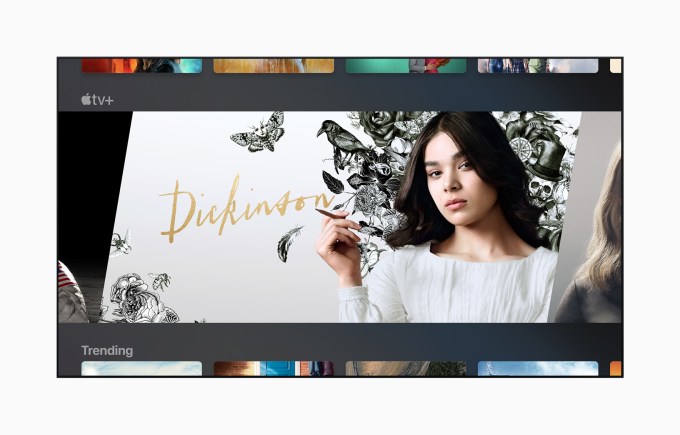
When Apple announced details on their three new subscription products (Apple TV+, Apple Arcade and Apple News+ — all of which are now live) back in March, the headlines that followed all described accurately how Apple’s business was increasingly shifting away from hardware towards services and how the future of the company may lie in these subscription businesses.

I largely accepted those headlines as fact, but one thing I have been thinking an awful lot about this week is how much I have loved Disney+ since signing up for an account and just how little I have thought about Apple TV+ despite signing up for both at their launches.

It’s admittedly not the fairest of comparisons, Disney has decades of classic content behind them while Apple is pushing out weekly updates to a few mostly meh TV shows. But no one was begging Apple to get into television. The company’s desires to diversify and own subscriptions that consumers have on their Apple devices certainly make sense for them, but their strategy of making that play without the help of any beloved series before them seems to have been a big miscalculation.

At TechCrunch, we write an awful lot about acquisitions worth hundreds of million, if not billions, of dollars. Some of the acquisitions that have intrigued me the most have been in the content space. Streaming networks are plunking down historic sums on series like Seinfeld, Friends and The Big Bang Theory. The buyers have differed throughout these deals, but they have never been Apple.

That’s because Apple isn’t bidding on history, they’re trying to nab directors and actors creating the series that will be the next hits. And while that sounds very Apple, it also sounds like a product that’s an awfully big gamble to the average consumer looking to try out a new streaming service. Why pick the service that’s starting from a standstill? Apple has ordered plenty of series and I have few doubts that at least one of the shows they plan to introduce is going to be a hit, but there isn’t much in the way of an early favorite yet and for subscribers that haven’t found “the one” yet, there’s very little reason to stick around.

Apple tv plus tv app 091019

Other networks with a half-dozen major series can afford a few flops because there’s a library of classics that’s filling up the dead space. Apple’s strategy is bold but is going to lead to awfully high churn among consumers that won’t be as forgiving of bad bets. This is an issue that’s sure to become less pronounced over time, but I would bet there will be quite a few consumers unsubscribing in the mean time leaving those on freebie subscriptions responsible for gauging which new shows are top notch.

Apple has also made the weird move of not housing their content inside an app so much as the Apple TV’s alternative UI inside the TV app. One one hand, this makes the lack of content less visible, but it also pushes all of the original series to the back of your mind. If you’re a Netflix user who has been subconsciously trained never to use the TV app on your Apple TV because none of their content is housed there, you’re really left forgetting about TV+ shows entirely when using the traditional app layout.

We haven’t received any super early numbers on Apple News+, Apple Arcade or Apple TV+, but none of the three appears to have made the sizable cultural splashes in their debuts that were hoped for at launch. Apple’s biggest bet of the three was undoubtedly TV+ and while their first series haven’t seemed to drop any jaws, what’s more concerning is whether the fundamentals of the service have been arranged so that unsatisfied subscribers feel any need to stick around.

Send me feedback
on Twitter @lucasmtny or email
lucas@techcrunch.com

On to the rest of the week’s news.

Image via AMY OSBORNE/AFP/Getty Images

Trends of the week

Here are a few big news items from big companies, with green links to all the sweet, sweet added context:

  • Facebook buys a game studio building Light saber Fruit Ninja
    One of the things I wrote about this week was Facebook buying the game studio behind one of virtual reality’s most popular titles, Beat Saber. No details on a price tag for the deal, but the buy brings the hop IP underneath Facebook’s corporate umbrella which seems poised to be eying more VR content acquisitions.
  • Twitter plans for account memorials
    Almost any time Twitter decides to make a big product change, one gets the feeling it was either snuck through or brute-forced by the CEO or another exec. That’s because there often doesn’t seem to be a lot of consideration for caveats that users seem to collectively identify almost immediately. This week was time for another one of these situations, after Twitter announced it was planning to deactivate old unused Twitter accounts en masse, something users realized was just going to lead to deactivating deceased people’s accounts and erasing what they had ever tweeted. Twitter, to their credit, decided to pause and rethink things.

GAFA Gaffes

How did the top tech companies screw up this week? This clearly needs its own section, in order of badness:

  1. Google appears to bring the hammer down on activism:
    [Google employee activist says she has been fired]

Disrupt Berlin

DISRUPT SF 530X350 V2 berlin

It’s hard to believe it’s already that time of the year again, but we just announced the agenda for Disrupt Berlin and we’ve got some all-stars making their way to the stage. I’ll be there this year, get some tickets and come say hey!

Sign up for more newsletters in your inbox (including this one) here.


from TechCrunch https://ift.tt/2LaHGCM